
 English
English
English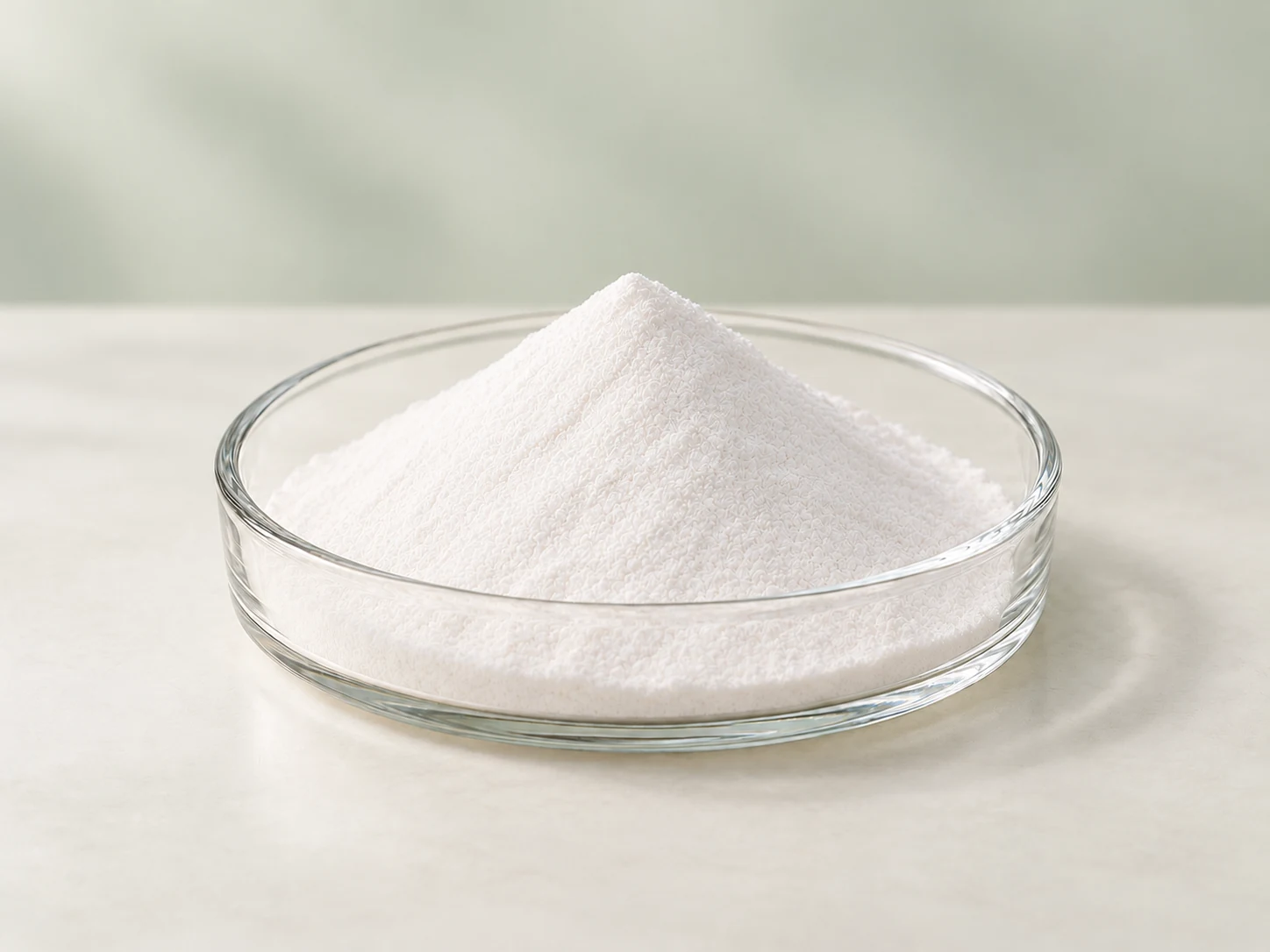
As a Sodium Hyaluronate manufacturer, Ureda Naturals supplies fermentation-derived Sodium Hyaluronate powder for food, beverage and personal-care formulation. The range includes Food Grade (assay ≥91%) and Cosmetic Grade (assay ≥95%), with customizable molecular-weight options from 3,000 to 3,000,000 Da. Select the grade for the intended product category, then select molecular weight for the solution behavior and texture required.
Sodium Hyaluronate is the sodium salt of hyaluronic acid. In aqueous systems, its molecular weight, concentration, hydration state and dissolved salts all influence viscosity and handling. Assay and molecular weight describe different aspects of the material: assay is not a substitute for molecular-weight information, and neither one alone predicts the finished formula’s viscosity.
Grade selection establishes the relevant product specification and intended formulation route. Molecular weight is a separate choice within that grade; a higher assay does not automatically mean a thicker solution or a better fit for a particular formula.
| Grade | Assay | Formulation area |
|---|---|---|
| Food Grade | ≥91% | Food, beverage and dairy formulations |
| Cosmetic Grade | ≥95% | Personal-care formulations, including serums, gels, creams, masks and color cosmetics |
Available molecular-weight options span 3,000–3,000,000 Da. The following bands help narrow the initial selection, but each band covers a range rather than one identical grade.
| Option | Common range | Formulation consideration |
|---|---|---|
| Oligo | 3–10 kDa | Lower viscosity contribution than the higher-molecular-weight bands at a matched concentration. |
| Low molecular weight | 10–200 kDa | A lower-viscosity starting range when a large increase in bulk viscosity is not wanted. |
| Medium molecular weight | 200–1,600 kDa | A broad intermediate range; grades within this band may still behave differently. |
| High molecular weight | 1,600–3,000 kDa | Generally makes a larger viscosity contribution at a matched concentration, so dispersion and process shear need attention. |
Molecular-weight bands are not viscosity guarantees. For a useful comparison, keep concentration, water quality, temperature, pH, salt content, hydration time and measurement conditions consistent. A molecular-weight value is also more informative when its measurement basis is known; values obtained by different methods should not be treated as directly interchangeable.
| Test item | Specification |
|---|---|
| Appearance | White to off-white powder |
| Assay | Food Grade: ≥91%; Cosmetic Grade: ≥95% |
| Glucuronic acid | ≥44% |
| pH (0.5% aqueous solution at 25°C) | 6.0–8.0 |
| Loss on drying | ≤8% |
| Residue on ignition | ≤13% |
| Protein | ≤0.1% |
| Nucleic acids (A260) | ≤0.5 |
| Total heavy metals (as Pb) | ≤10 ppm |
| Total aerobic microbial count | ≤100 CFU/g |
| Total yeast and mold | ≤10 CFU/g |
| Escherichia coli | Not detected |
| Salmonella | Not detected |
Fast surface hydration can form a tacky layer around dry powder, trapping unwetted material inside and creating lumps. Add Sodium Hyaluronate gradually into a moving aqueous phase rather than tipping the full amount into still water or an already viscous mixture. Where the formula permits, preblending with part of the compatible dry ingredients can also help distribute the powder before hydration.
Do not compare viscosity readings taken at different hydration stages. For repeatable development work, use the same concentration, water quality, temperature, mixing history and hydration interval, then measure with the same instrument setup. Sodium Hyaluronate solutions can be shear-dependent, so a low-shear vessel reading may not represent behavior during pumping, homogenization or filling.
Salts and minerals can change the solution environment around the polymer chains and shift apparent viscosity. For formulation screening, establish a hydrated water-phase baseline first; then introduce the actual mineral salts, acids, proteins or other hydrocolloids in controlled steps. This separates incomplete hydration from changes caused by the finished matrix.
For beverages, assess more than whether the powder initially disperses. Check the hydrated system for clarity or haze, sedimentation and viscosity after the actual pH adjustment, mineral addition and planned processing or holding steps. A water-only control helps identify whether a change comes from hydration or from the beverage matrix.
In dairy and protein-containing systems, evaluate Sodium Hyaluronate in the intended base rather than assuming that a result in water will transfer unchanged. Keep the grade and molecular weight fixed while testing the matrix; then change one major variable at a time, such as mineral content, protein level or processing sequence. This makes changes in body, flow and visible stability easier to interpret.
For aqueous serums and gels, select molecular weight around the desired flow, viscosity and skin-feel profile, then hydrate the powder fully before judging the final texture. A higher-molecular-weight option generally contributes more viscosity at a matched concentration, while the finished feel also depends on concentration, humectants, salts, pH and the other polymers in the formula.
For creams, emulsions and color cosmetics, assess the ingredient in the actual water phase and through the intended emulsification and filling process. Changing when the powder is added can change how well it hydrates and how the batch builds viscosity. Compare the finished formula after its real processing sequence rather than relying only on a pre-emulsion sample.
MOQ: 1 kg.
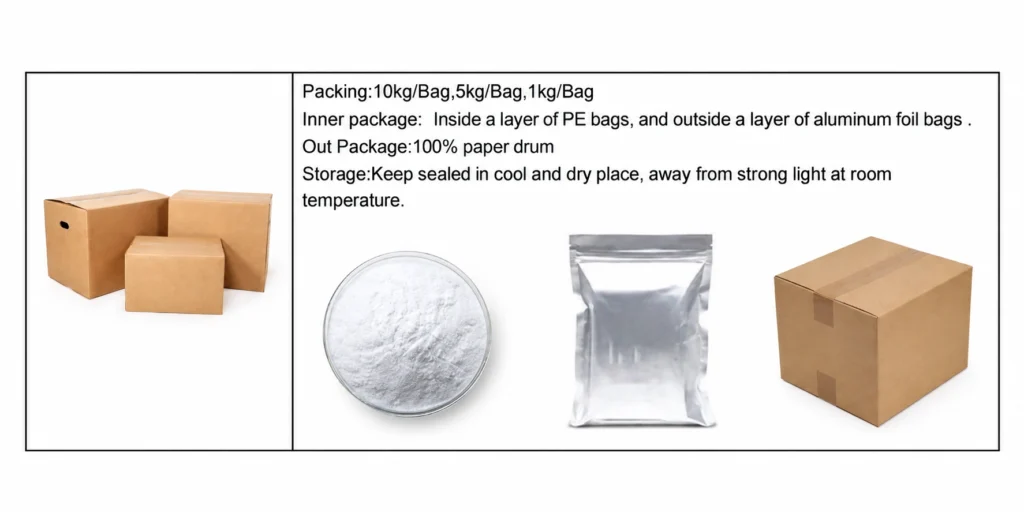
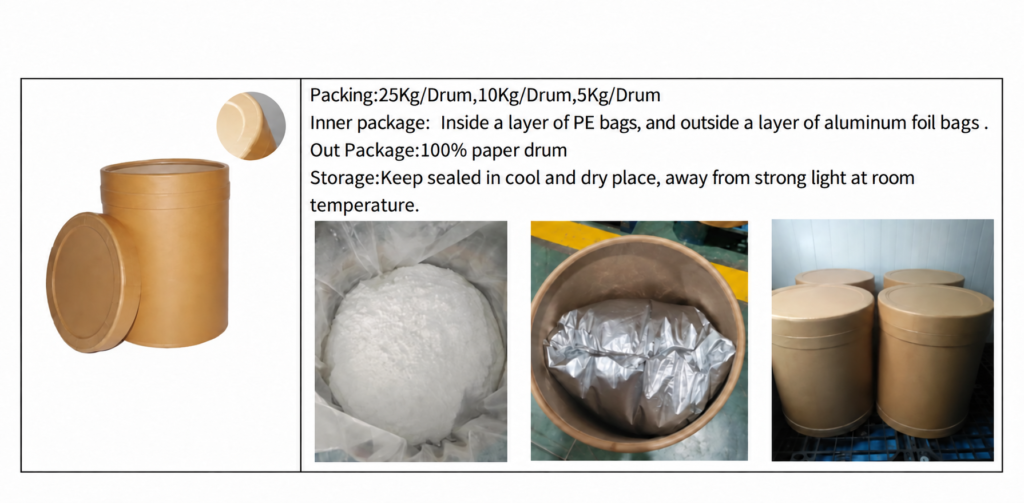
Quality documentation includes COA, TDS, SDS, and source and allergen information. GMP, FSSC 22000, ISO 9001, HACCP, Halal and Kosher documentation is available. FDA-related regulatory support is provided separately and is not described as an FDA certification.

Assay measures the material content specified for the grade; it does not define polymer-chain size. Molecular-weight distribution, concentration, hydration and the dissolved salts in the formula all influence viscosity. When comparing grades, hold the formula and measurement conditions constant so the assay value is not mistaken for a rheology specification.
Not when the target depends on viscosity, flow or texture. At the same concentration, the lower-molecular-weight option generally contributes less viscosity than a higher-molecular-weight option. Compare them in the intended formula and through the real processing sequence, then adjust the use level against the target texture and handling requirements.
The outside of a powder agglomerate can hydrate before the dry center does, forming a tacky layer that slows water penetration. Add the powder gradually into a moving aqueous phase, avoid adding the full charge at once, and allow hydration to finish before evaluating viscosity. If dry blending is compatible with the formula, preblend with part of the other dry ingredients to improve distribution.
Sodium Hyaluronate is a charged polymer, so dissolved ions can alter chain expansion in water. The effect depends on the ion type and concentration; it should not be assumed to be identical for every salt or formula. Compare a hydrated water-phase control with the same system after each mineral addition to identify which change is driving the viscosity shift.
Match polymer concentration, water quality, temperature, pH, ionic strength, hydration interval and shear or instrument conditions. Sodium Hyaluronate solutions can be shear-dependent, so readings from different spindle speeds, geometries or flow conditions may not be directly comparable. Record those conditions alongside the result.
Compare the stated molecular-weight range and measurement basis, not just a single nominal number. Then compare viscosity under matched concentration, temperature, hydration and salt conditions. Two grades with similar labels may still differ in chain-size distribution and finished-formula behavior.
INGREDIENT PARTNER
Tell us your intended application, approximate quantity and target market. Ureda Naturals will confirm the closest grade, packaging configuration and available documentation for your project.

