
 English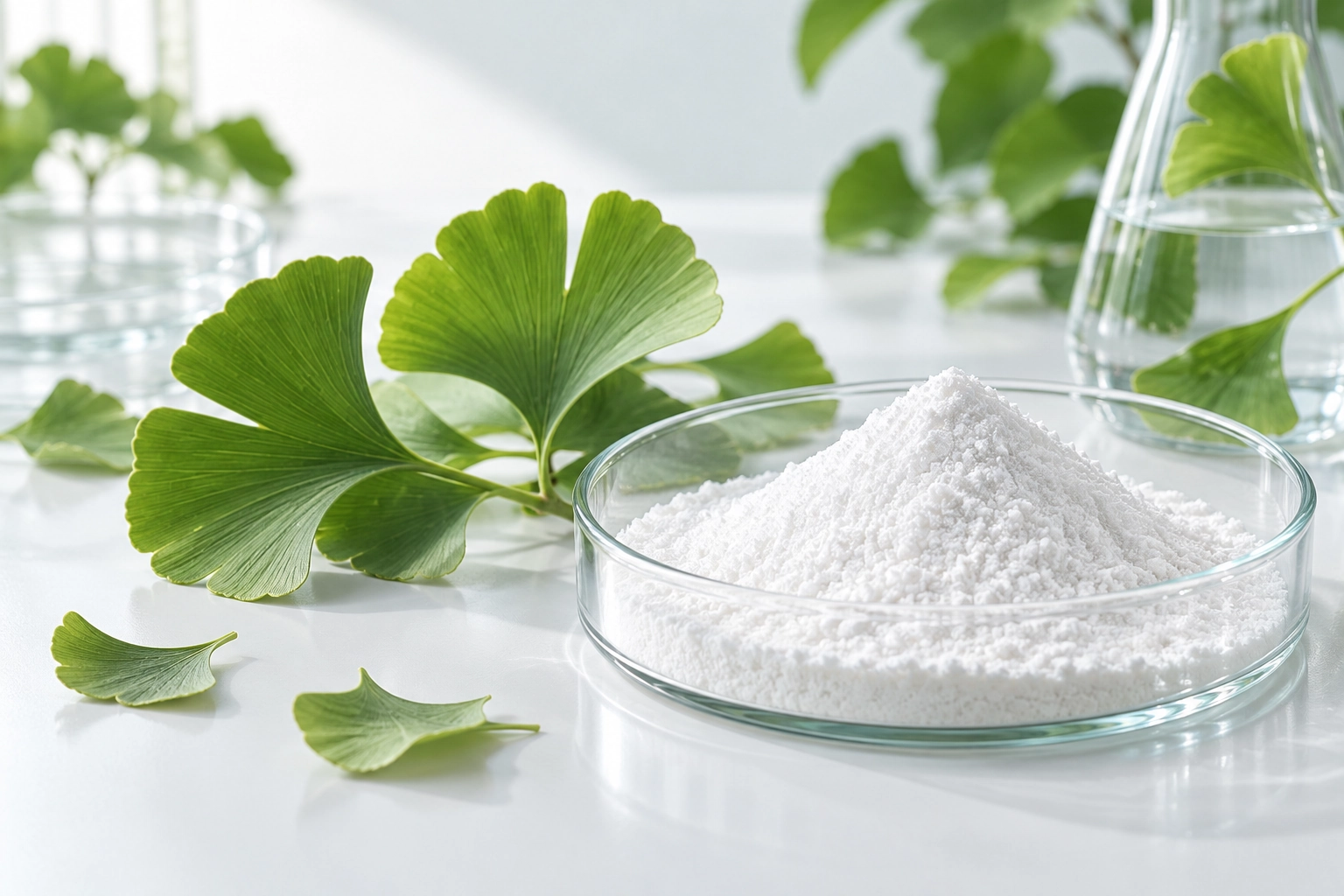
Shikimic Acid is a Ginkgo biloba leaf-derived, water-soluble organic acid supplied as a white powder. Ureda Naturals offers this defined material with a dry-basis assay of ≥98.0%, specific rotation of −185° to −180°, moisture ≤0.5% and ash ≤0.5% for pharmaceutical intermediate and specialty formulation development.
| Product Name | Shikimic Acid |
|---|---|
| Source | Ginkgo biloba leaves |
| CAS No.: | 138-59-0 |
| Assay: | ≥98.0% on a dry basis |
Shikimic Acid is a defined organic acid supplied as a white powder and derived from Ginkgo biloba leaves. Ureda Naturals manufactures this water-soluble ingredient for pharmaceutical intermediate development, chiral synthesis and selected specialty formulation applications.
The material is specified by assay on a dry basis, specific rotation, moisture, ash, melting point, heavy metals and water solubility. These attributes help buyers evaluate chemical identity, material consistency and suitability for downstream process development.
| Test Item | Specification |
|---|---|
| Product Name | Shikimic Acid |
| Source | Ginkgo biloba leaves |
| CAS No. | 138-59-0 |
| Appearance | White powder |
| Shikimic Acid Assay, Dry Basis | ≥98.0% |
| Moisture | ≤0.5% |
| Specific Rotation [α]D25 | −185° to −180° |
| Ash | ≤0.5% |
| Melting Point | 184–188°C |
| Heavy Metals, as Pb | ≤20 mg/kg |
| Solubility | Easily soluble in water |
Shikimic Acid and standardized Ginkgo biloba extract are different commercial materials. A standardized Ginkgo extract is characterized by a broader botanical profile, while Shikimic Acid is supplied as a defined small-molecule organic acid with a dedicated assay and identity-control framework.
This distinction is important when the ingredient is used as a process intermediate. Buyers should qualify the material against the intended chemical route and not substitute a general Ginkgo extract specification for a Shikimic Acid specification.
Ginkgo biloba leaves contain a complex matrix of flavonoids, terpene-related constituents and other organic compounds. Producing a defined Shikimic Acid material therefore requires separation of the target acid from the surrounding botanical matrix.
The manufacturing route is organized around controlled extraction, clarification, selective separation, concentration, crystallization and drying. The resulting release profile focuses on the attributes most relevant to chemical identity and process use: dry-basis assay, optical rotation, moisture, ash, melting point, heavy metals and aqueous solubility.
| Attribute | Why It Matters to the Buyer |
|---|---|
| Dry-basis assay | Defines the active Shikimic Acid fraction used for material comparison and charge calculation. |
| Moisture | Changes the as-is mass required to deliver a defined dry-basis amount and can affect storage behavior. |
| Specific rotation | Provides an orthogonal identity and stereochemical consistency check alongside the assay. |
| Ash | Indicates the level of inorganic residue remaining in the material. |
| Melting point | Provides an additional physical identity and solid-state consistency reference. |
| Heavy metals | Supports raw-material screening and customer quality-release requirements. |
| Water solubility | Helps determine the suitability of the material for aqueous reaction, dilution and formulation steps. |
When the customer’s process requires a defined mass of Shikimic Acid, the powder charge should account for both assay and moisture:
Powder charge = Target active mass ÷ [assay fraction × (1 − moisture fraction)]
This calculation keeps the material addition aligned with the dry-basis specification rather than relying only on the gross powder weight.
Shikimic Acid is used as a chiral starting material in pharmaceutical process development, including routes related to oseltamivir synthesis. The defined assay and optical rotation provide practical release attributes for route qualification and raw-material comparison.
For research and manufacturing teams working with stereochemically defined intermediates, Shikimic Acid can be evaluated as a plant-derived building block. Assay, specific rotation, moisture and melting point should be considered together when comparing material lots or process trials.
The material’s water solubility supports evaluation in aqueous systems and water-based specialty formulations where a white, defined organic acid is required.
A standardized Ginkgo extract is defined by a broader botanical composition, while Shikimic Acid is a specific small-molecule organic acid. The two materials therefore require different specifications, analytical controls and application decisions. A standardized Ginkgo extract should not be used as a substitute for a defined Shikimic Acid grade in a chemical synthesis route.
Specific rotation provides an additional identity and stereochemical consistency check beyond the assay. For process chemistry, it is most useful when reviewed together with assay, moisture, melting point and the customer’s route-specific impurity requirements.
The dry-basis assay expresses the Shikimic Acid content after excluding water. The actual powder charge must therefore account for both the assay fraction and the moisture fraction. Using only the gross powder weight can understate or overstate the amount of active material delivered to the process.
Melting point provides a separate physical identity and solid-state reference. It does not replace chemical assay or optical rotation, but it adds another comparison point when investigating material consistency or an unexpected difference in dissolution or handling behavior.
Confirm the material identity, dry-basis charge, water addition sequence and the actual dissolution behavior under the process conditions. Temperature, concentration, mixing intensity and hold time can influence how quickly the material enters solution, so the customer’s process should be qualified at the intended working concentration before scale-up.
INGREDIENT PARTNER
Tell us your intended application, approximate quantity and target market. Ureda Naturals will confirm the closest grade, packaging configuration and available documentation for your project.

Scan the QR code or
search WeChat ID: 18270717590
From Natural Origin to Formulation Intent
Tell us what you’re sourcing.
