
 English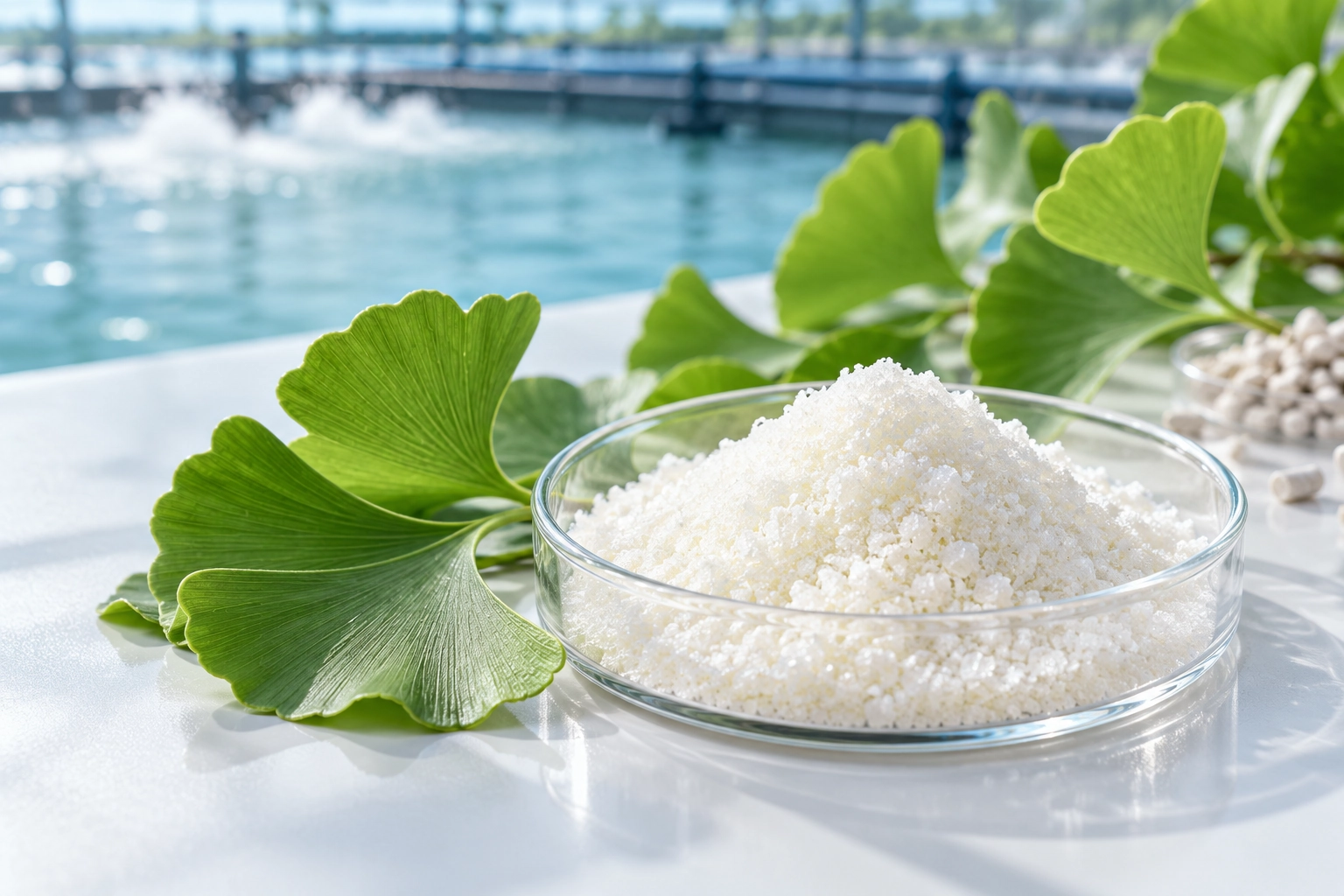
Quinic Acid is a Ginkgo biloba leaf-derived feed ingredient supplied as a white to pale-yellow crystalline powder. Ureda Naturals offers this material with ≥98.0% assay on a dried basis, moisture ≤1.0% and specific rotation of −44° to −42% for controlled shrimp-feed and animal-nutrition development applications.
| Product Name | Quinic Acid |
|---|---|
| Source | Ginkgo biloba leaves |
| CAS No.: | 77-95-2 |
| Appearance | White to pale-yellow crystalline powder |
| Assay | ≥98.0% on a dried basis |
Ureda Naturals manufactures Quinic Acid derived from Ginkgo biloba leaves. The material is supplied as a white to pale-yellow crystalline powder with a Quinic Acid assay of ≥98.0% on a dried basis, moisture ≤1.0% and specific rotation of −44° to −42°.
The product is intended for defined feed-additive applications, particularly shrimp-feed development, where low inclusion levels require accurate active-content calculation and controlled premix distribution.
| Item | Specification |
|---|---|
| Product Name | Quinic Acid |
| CAS No. | 77-95-2 |
| Source | Ginkgo biloba leaves |
| Molecular Formula | C7H12O6 |
| Molecular Weight | 192.17 |
| Appearance | White to pale-yellow crystalline powder |
| Assay | ≥98.0% on a dried basis |
| Moisture | ≤1.0% |
| Specific Rotation [α]D25 | −44° to −42° |
| Feed-Additive Grade Standard | ≥95% |
Quinic Acid is a defined organic acid identified by CAS No. 77-95-2. It is not equivalent to standardized Ginkgo biloba extract.
A standardized Ginkgo biloba extract contains multiple botanical constituents and is controlled using a broader marker profile. Quinic Acid is controlled around a specific target compound with dedicated assay, moisture and specific-rotation requirements.
Quinic Acid is also chemically different from Shikimic Acid. The two ingredients have different CAS numbers, molecular identities and commercial specifications.
The commercial technical specification for this material is Quinic Acid ≥98.0% on a dried basis.
The ≥95% value refers to the minimum content standard associated with the feed-additive grade. These two values describe different specification contexts and should not be combined into one general purity statement.
The material supplied on this page is presented as the ≥98.0% dried-basis technical grade.
Ginkgo biloba leaf-derived Quinic Acid is used in the documented shrimp-feed application at a recommended addition level of 50–100 mg/kg feed. The functional positioning is to support antioxidant-capacity management in shrimp production programs.
At this inclusion level, the active amount is small. For a 100 kg feed batch, the target active Quinic Acid amount is only 5–10 g before correction for assay and moisture. The material should therefore be incorporated through an intermediate premix rather than weighed directly into the complete-feed batch.
The product information also identifies 200 mg/kg as an evaluation level for piglet-diet development, with attention to diarrhea rate, crude-fat digestibility and antioxidant-capacity indicators.
This is a separate formulation-development use from the documented shrimp-feed application. The two programs involve different target species, feed matrices and evaluation endpoints.
Because the assay is expressed on a dried basis, the actual powder mass must be corrected for moisture.
Effective active fraction = dried-basis assay × (1 − moisture fraction)
Powder charge = target active mass ÷ effective active fraction
The calculation should use the actual assay and moisture values for the supplied material rather than relying only on specification limits.
At 50–100 mg/kg, formulation control should focus on intermediate premix dilution, carrier compatibility, addition sequence, mixing time, transfer losses and finished-feed concentration uniformity.
| Attribute | Quality Decision Supported |
|---|---|
| CAS No. and source | Confirms that the purchased material is Ginkgo biloba leaf-derived Quinic Acid. |
| Dried-basis assay | Defines the active content used for charge calculation. |
| Moisture | Converts dried-basis content into an as-is powder addition. |
| Specific rotation | Provides an identity and consistency check independent of assay. |
| Appearance | Confirms the expected white to pale-yellow crystalline physical form. |
| Grade standard | Separates the ≥98.0% technical specification from the ≥95% feed-additive minimum. |
Specific rotation should not be interpreted as a direct measure of antioxidant performance. It is an identity and consistency attribute, while feed performance must be evaluated through the intended feed application.
No. Supplier comparison should also include botanical source, assay basis, moisture, specific rotation, appearance and grade definition. Two materials may share the same CAS number while differing in active content, physical form and feed-application suitability.
The target should first be defined as active Quinic Acid. The actual powder charge must then be corrected for the dried-basis assay and measured moisture of the supplied material. The corrected powder quantity should be incorporated through an intermediate premix.
At 50–100 mg/kg, the active quantity is small relative to the complete-feed mass. Direct addition can increase local concentration differences and sampling variation. Pre-dilution with a compatible carrier improves distribution before final mixing.
Assay measures the amount of Quinic Acid, while specific rotation provides a separate identity and consistency attribute. Reviewing both gives a stronger material-qualification basis than relying on assay alone.
No. The 200 mg/kg value is a separate piglet-diet development reference. The documented shrimp-feed addition level is 50–100 mg/kg, and the two application levels should not be transferred between species without separate formulation and performance evaluation.
INGREDIENT PARTNER
Tell us your intended application, approximate quantity and target market. Ureda Naturals will confirm the closest grade, packaging configuration and available documentation for your project.

Scan the QR code or
search WeChat ID: 18270717590
From Natural Origin to Formulation Intent
Tell us what you’re sourcing.
