
 English
English
English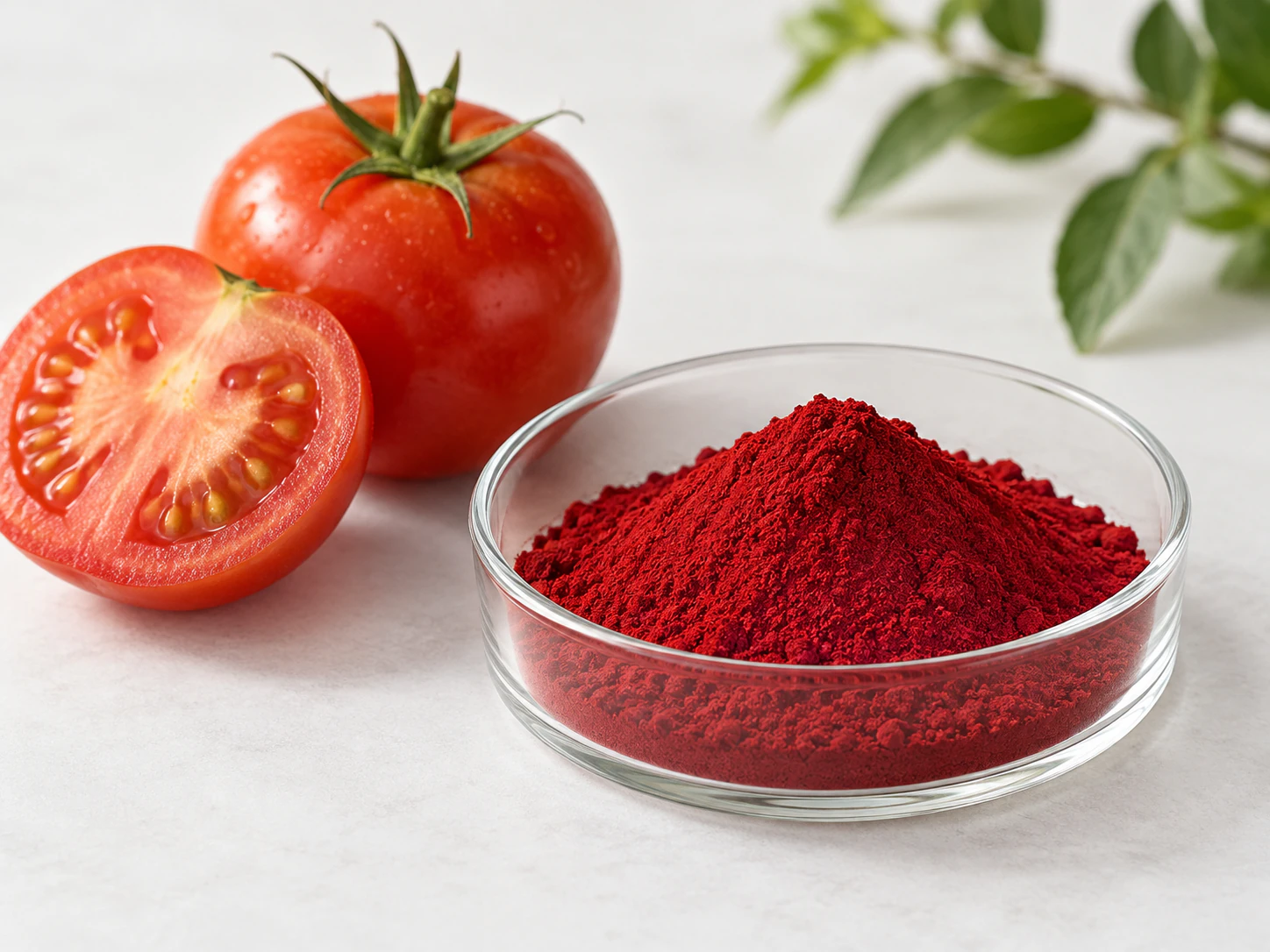
As a lycopene manufacturer, Ureda Naturals supplies fermentation-derived Lycopene for food, beverage, and dietary supplement manufacturers. The product line includes high-purity powder, cold-water-dispersible (CWS) powder, and oil suspension. Grade selection depends on active loading and the phase of the finished product—not assay alone.
The three formats deliver Lycopene into different formulation systems. Compare both the assay and the physical form before selecting a grade.
| High-purity powder | Assay: ≥95% Lycopene. A concentrated format for applications where high active loading and lower ingredient mass are priorities. |
|---|---|
| CWS powder | Assay options: ≥5% and ≥10%. A cold-water-dispersible format for aqueous products and beverage development. |
| Oil suspension | Assay options: ≥5% and ≥10%. An oil-phase format for softgels and other lipid-based formulations. |
Ureda Naturals’ Lycopene is produced through natural liquid deep fermentation using a patented non-GMO Blakeslea trispora strain. Fermentation-derived and tomato-derived Lycopene share the same target carotenoid, but their source documentation and finished ingredient formats are distinct. For procurement and formulation, compare the source, assay, carrier system, and physical form together.
The product range also includes a patented high-stability microencapsulated preparation. Microencapsulation is a delivery-format feature; it should not be confused with the ≥95% assay of the high-purity powder. Compare the assay and format for the specific grade being evaluated.
The following specification limits apply to the ≥95% high-purity powder only. CWS powder and oil suspension are separate formulations with their own assay and carrier profiles.
| Total lycopenes | ≥95.0% (HPLC) |
|---|---|
| All-trans lycopene | ≥90.0% (HPLC) |
| Other carotenoids | ≤5.0% (HPLC) |
| Loss on drying | ≤0.5% (40°C, 4 hours, 20 mm Hg; JECFA Volume 4 method) |
| Lead | ≤1 mg/kg (AAS or ICP-AES) |
| Residual solvents | Isopropanol: ≤0.1%; isobutyl acetate: ≤1.0% (JECFA Volume 4) |
The batch COA reports lot-specific results against the applicable specification limits.
Total lycopenes and all-trans lycopene are separate quality measures. Total lycopenes measures the combined lycopene content, while the all-trans result describes one part of the isomer profile. HPLC can distinguish total lycopenes, all-trans lycopene, and other carotenoids; an assay value alone does not describe the full profile.
Heat and light can promote isomerization, while oxygen exposure can contribute to oxidation. This is why the incoming raw-material assay and the finished product’s post-process retention answer different questions. For process development, compare the incoming and processed samples using the same analytical method.
Assay also changes the amount of ingredient required for a target active load. At nominal assay, 100 mg of Lycopene corresponds to approximately 105 mg of 95% powder, 1.0 g of a 10% grade, or 2.0 g of a 5% grade. These are active-content calculations only: they do not make the formats functionally interchangeable or account for process losses.
CWS powder is the starting format for aqueous products that need a water-dispersible Lycopene preparation. In a pilot, prepare a consistent pre-dispersion in the aqueous phase and assess color distribution, sediment, and redispersibility after the actual process and holding period. “Cold-water-dispersible” describes the prepared ingredient’s behavior in water; it does not mean the Lycopene molecule is molecularly soluble in water.
The ≥95% powder provides a concentrated Lycopene input when the formulation calls for a high active load with less ingredient mass. At low inclusion levels in a large blend, a compatible premix can help distribute the concentrated powder more consistently. Blend uniformity should be assessed in the intended formulation rather than inferred from assay alone.
Oil suspension is intended for lipid-phase formulations such as softgels and oil-based blends. It is not a direct replacement for CWS powder in a water-based beverage. If an oil suspension is selected for a beverage, the formulation needs an emulsification step to incorporate the oil phase into the aqueous system.
| MOQ | 1 kg |
|---|---|
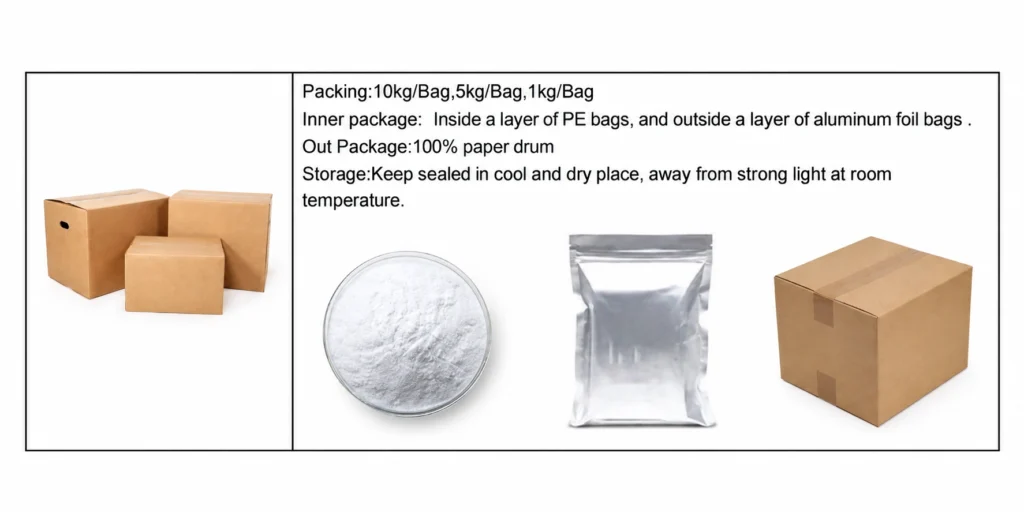
| Bag packaging for solid grades | 1 kg, 5 kg, or 10 kg. PE inner bag, aluminum-foil barrier bag, and outer carton. |
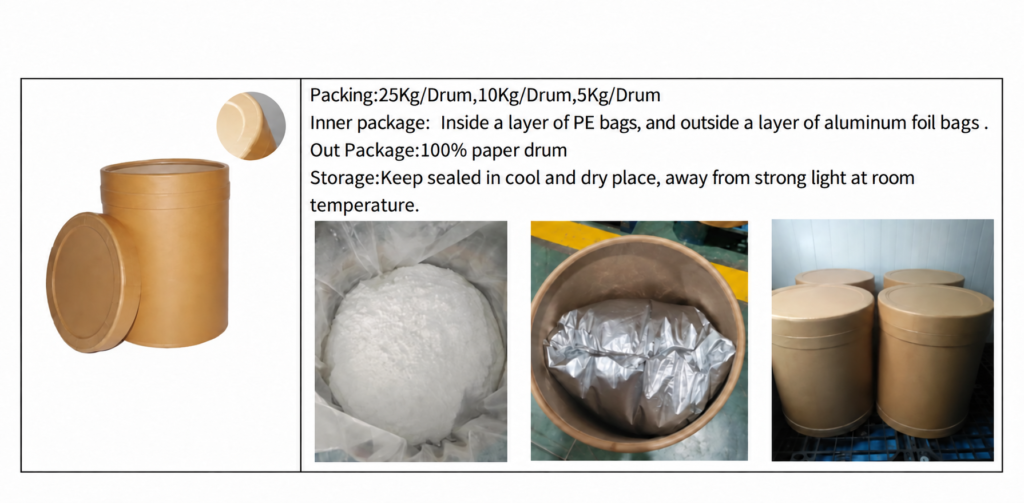
| Paper-drum packaging for solid grades | 5 kg, 10 kg, or 25 kg. PE inner bag and aluminum-foil barrier layer inside a 100% paper drum. |
| Oil suspension packaging | Sealed, light-protective containers. |
| Storage | Keep sealed in a cool, dry place at room temperature and protect from strong light, heat, and unnecessary air exposure. |
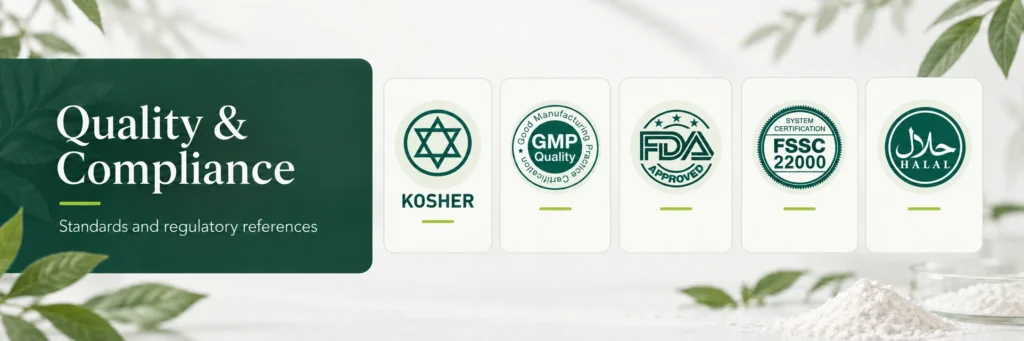
| Quality and food-safety systems | GMP, FSSC 22000, ISO 9001, and HACCP. |
| Religious certifications | Halal and Kosher. |
| Product and regulatory documents | COA, TDS, SDS, source, GMO, and allergen information, plus FDA-related regulatory support documentation. |
| Quality benchmark | USP or higher standards. |
No. CWS describes a prepared ingredient that can disperse in water; it does not change Lycopene’s underlying water-insoluble character. For beverage development, assess the dispersion in the complete formula, including its appearance and sediment or redispersibility after processing and storage.
Not as a direct format-for-format substitution. The nominal active loading may be the same, but the carrier system and formulation phase differ. CWS powder is intended for aqueous systems; oil suspension is intended for lipid phases. A beverage using the oil suspension requires emulsification.
Total lycopenes and all-trans lycopene describe different parts of the analytical profile. Total lycopenes measures the combined lycopene content; the all-trans result distinguishes that isomer from the other lycopene isomers. Reviewing both helps a formulator assess composition rather than relying on one assay number alone.
Consider a premix when a concentrated powder is used at a low inclusion level in a much larger blend. It can make distribution easier to control, but it does not by itself establish blend uniformity. Evaluate the premix and final blend in the intended batch size and mixing process.
INGREDIENT PARTNER
Tell us your intended application, approximate quantity and target market. Ureda Naturals will confirm the closest grade, packaging configuration and available documentation for your project.

