
 English
English
English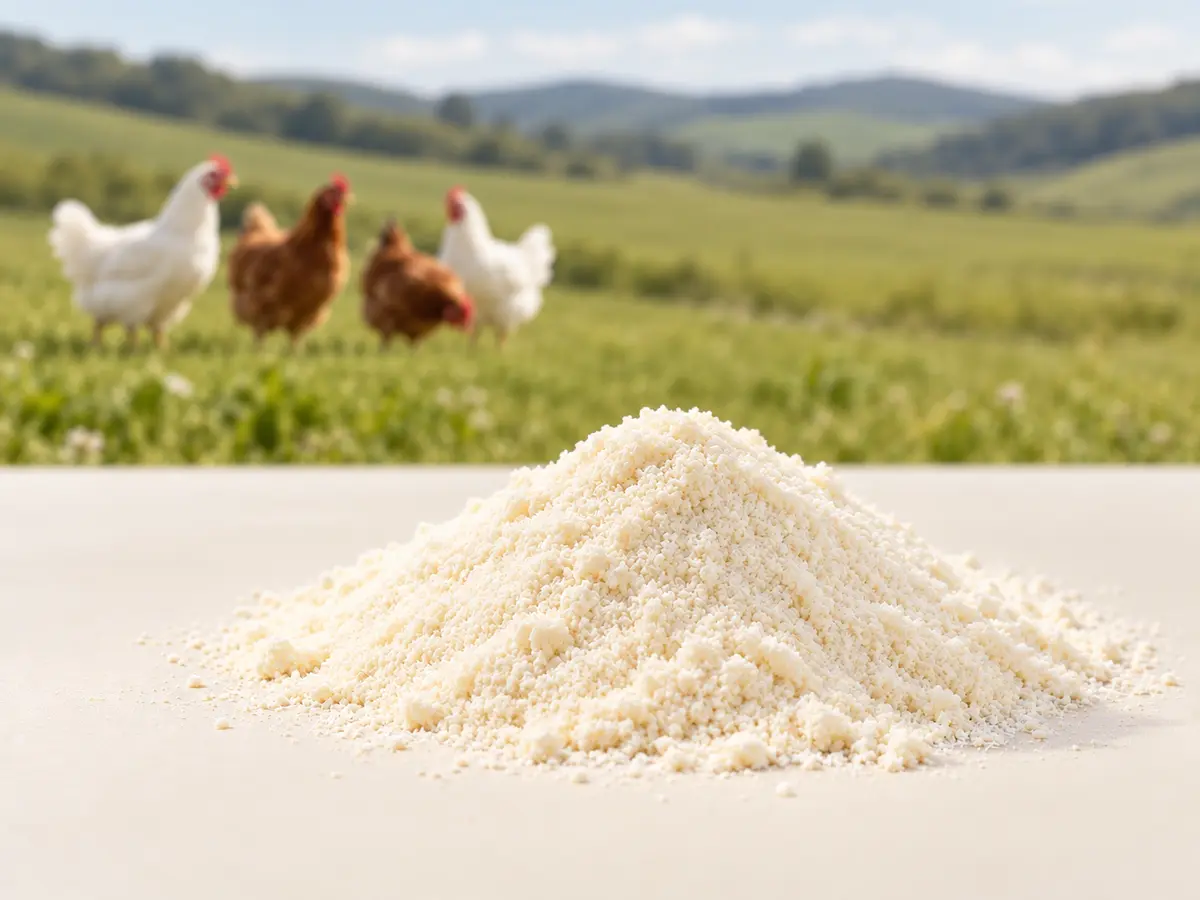
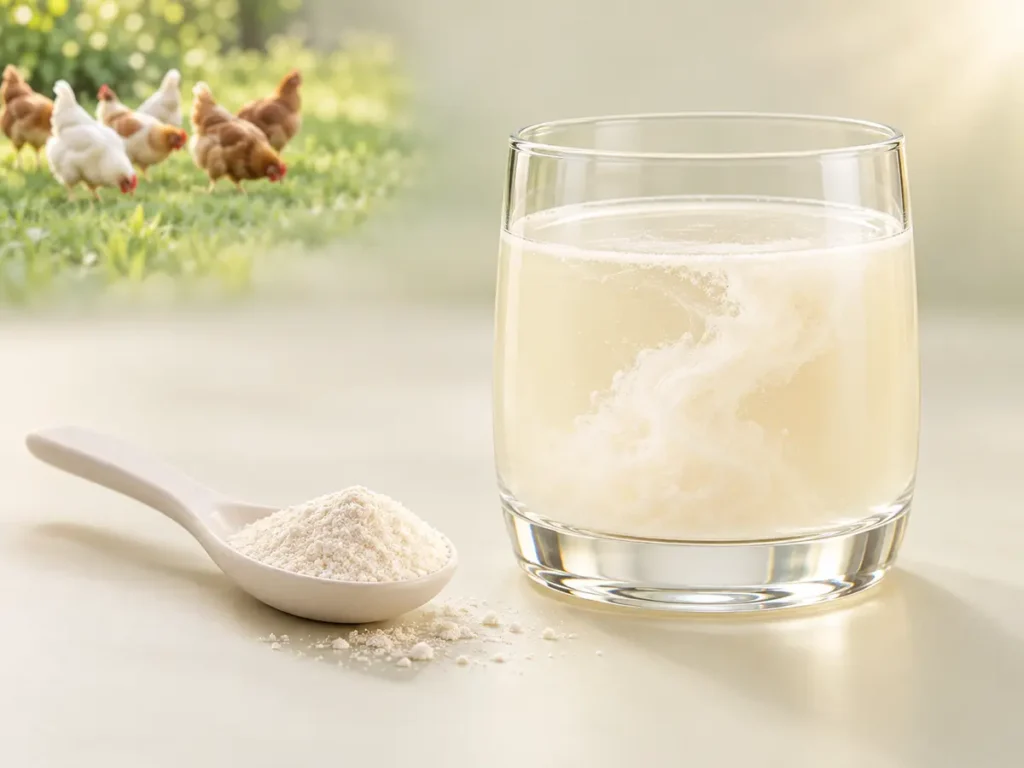
This product is made from chicken bone and processed into collagen peptides. It is distinct from chicken sternum cartilage-derived Type II collagen products: animal species alone does not establish the same tissue source, collagen type or processing state. Buyers evaluating a substitute should compare the source tissue and product specification—not just the phrase “chicken collagen.”
The specification sets an average molecular weight limit of ≤1,000 Da. This is an average-value criterion, not a statement that every peptide molecule is below 1,000 Da or that a particular percentage falls within a specific size range.
| Test Item | Specification | Test Result |
|---|---|---|
| Color | White or light yellow | Pass |
| Odor | Characteristic odor | Pass |
| Condition | Powder or granular form; no visible foreign matter | Pass |
| Protein, dry basis | ≥90.0% | 93.6% |
| Average molecular weight | ≤1,000 Da | Pass |
| pH, 1% aqueous solution | 5.0–7.0 | 5.6 |
| Hydroxyproline, dry basis | ≥3.0% | 7.8% |
| Loss on drying | ≤5.0% | 3.1% |
| Ash | ≤3.0% | 1.9% |
| Lead | ≤0.5 mg/kg | <0.5 mg/kg |
| Cadmium | ≤0.1 mg/kg | <0.1 mg/kg |
| Chromium | ≤2.0 mg/kg | <2.0 mg/kg |
| Arsenic | ≤0.1 mg/kg | <0.1 mg/kg |
| Mercury | ≤0.1 mg/kg | <0.1 mg/kg |
| Total bacterial count | ≤1,000 CFU/g | <100 CFU/g |
| Yeast and mold | ≤100 CFU/g | <100 CFU/g |
| Coliform bacteria | ≤0.3 MPN/g | <0.3 MPN/g |
| Staphylococcus aureus | Negative in 25 g | Negative |
| Salmonella | Negative in 25 g | Negative |
For shipment qualification, review the applicable batch COA against the agreed specification.
Protein and hydroxyproline provide different information. Protein content indicates total protein on a dry basis; hydroxyproline is a collagen-associated amino-acid marker. They are complementary measurements, but neither alone establishes collagen type or the full peptide-size distribution.
The pH result applies to a 1% aqueous solution. It is useful for raw-material comparison, but it does not determine the pH or stability of a finished formula.
Water solubility describes the ingredient’s behavior in water; it does not guarantee clarity in every finished beverage. For a useful comparison, prepare a water-only control and the target formula at the same use level. Apply the intended mixing and heat process, then compare appearance, sediment and redispersibility after the planned hold period. If the water control remains clear while the finished formula becomes cloudy or forms sediment, investigate the formula matrix and process conditions rather than assuming the powder failed to dissolve.
Average molecular weight does not predict powder flow, capsule filling or tablet performance. Evaluate flow, blending and fill consistency using the intended equipment and finished blend.
Qualify the peptide in the final base, including the intended pH and preservation system. Check appearance, odor and precipitation after processing and during the planned stability period.
Supplier qualification documents: COA, TDS, SDS, chicken-source and allergen documentation, and applicable GMP, FSSC 22000, ISO 9001, HACCP, Halal, Kosher and FDA-related regulatory documents.
No. This ingredient is an enzymatically hydrolyzed peptide made from chicken bone. Chicken Type II collagen products are generally associated with cartilage sources and may have a different processing state. Before substitution, compare tissue source, hydrolysis status and the applicable quality specification.
No. An average does not describe the full distribution. If a formulation depends on the proportion of peptides within a particular size range, compare the analytical method and distribution data for the relevant material rather than relying on the average limit alone.
Solubility in water does not establish compatibility with the complete beverage matrix. Compare the ingredient in water with the same dose in the finished formula, then apply the actual process and hold conditions. A difference between those samples points toward a matrix or process interaction rather than simply poor initial dissolution.
No. Protein and hydroxyproline are useful complementary quality measures, but they do not identify collagen type or show the complete peptide-size distribution. Those decisions require the relevant source, identity and analytical information to be considered together.
No. Molecular weight describes peptide size, not powder flow or fill behavior. Capsule or tablet development should assess the ingredient in the actual blend and equipment, including flow, segregation and fill consistency.
INGREDIENT PARTNER
Tell us your intended application, approximate quantity and target market. Ureda Naturals will confirm the closest grade, packaging configuration and available documentation for your project.

