
 Spanish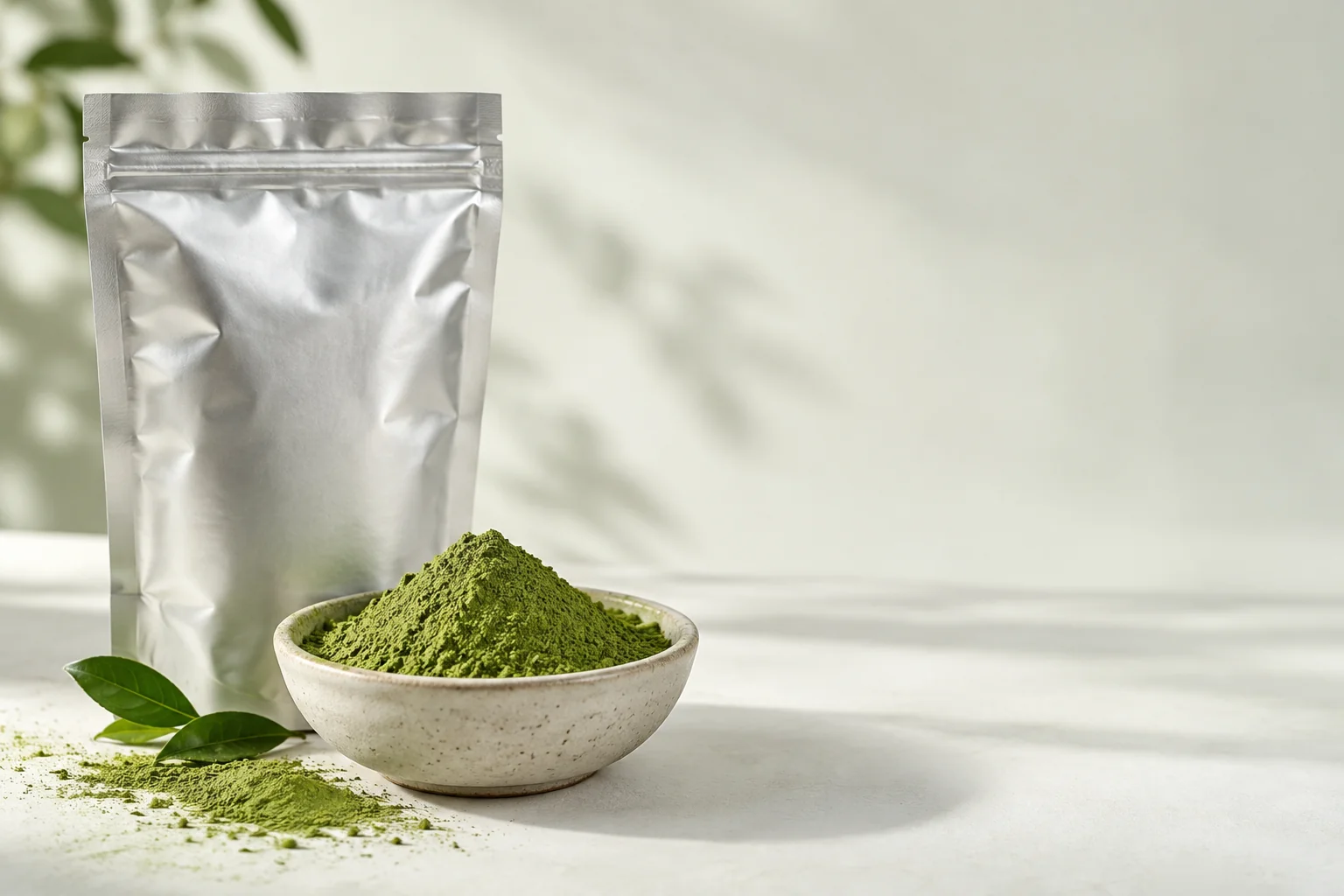
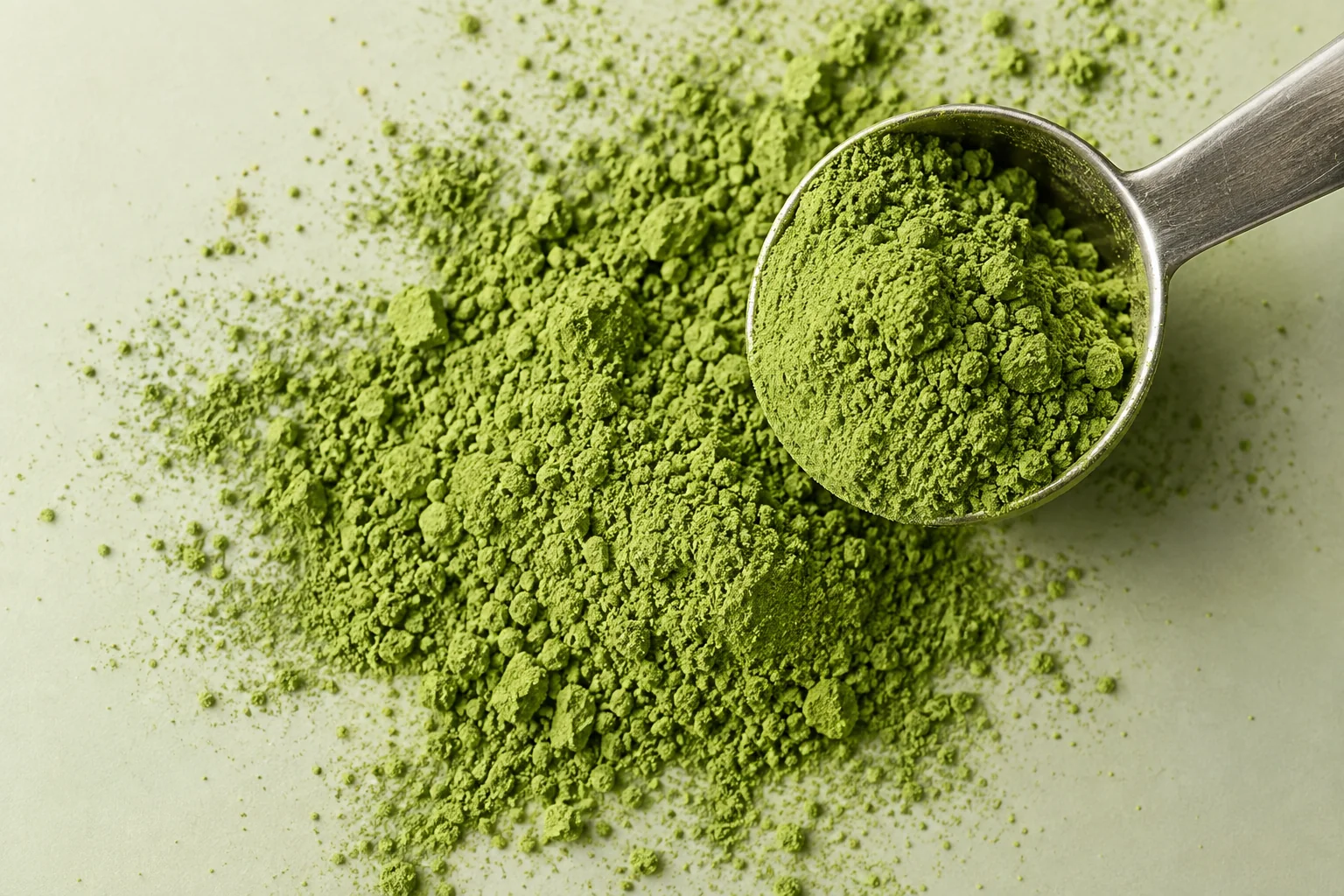
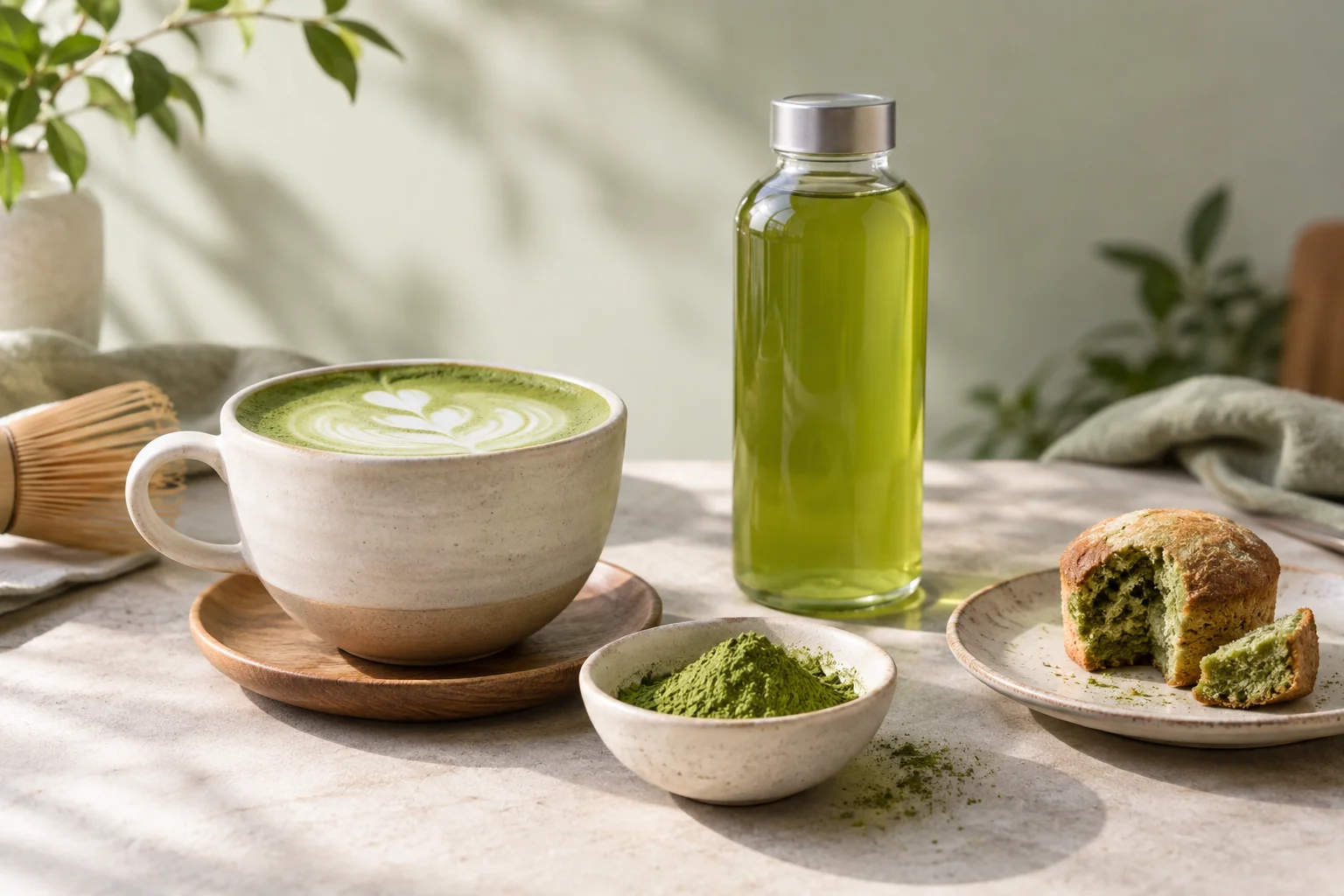
Ureda Naturals manufactures and supplies bulk matcha powder for direct drinking, matcha lattes, café beverages, RTD development, bakery, confectionery, frozen desserts and nutrition blends. The product range includes S3, S2 and S1 drinking and barista grades, together with café, culinary and industrial options selected according to finished-product colour, flavour intensity, processing conditions and target cost.
| Origin | China-origin |
|---|---|
| Form | Fine powder |
| Composition | 100% green tea / matcha powder |
| Grade options | Imperial Ceremonial; Premium Ceremonial; Barista Reserve / Premium; Café Standard; Classic Culinary; Industrial Grade |
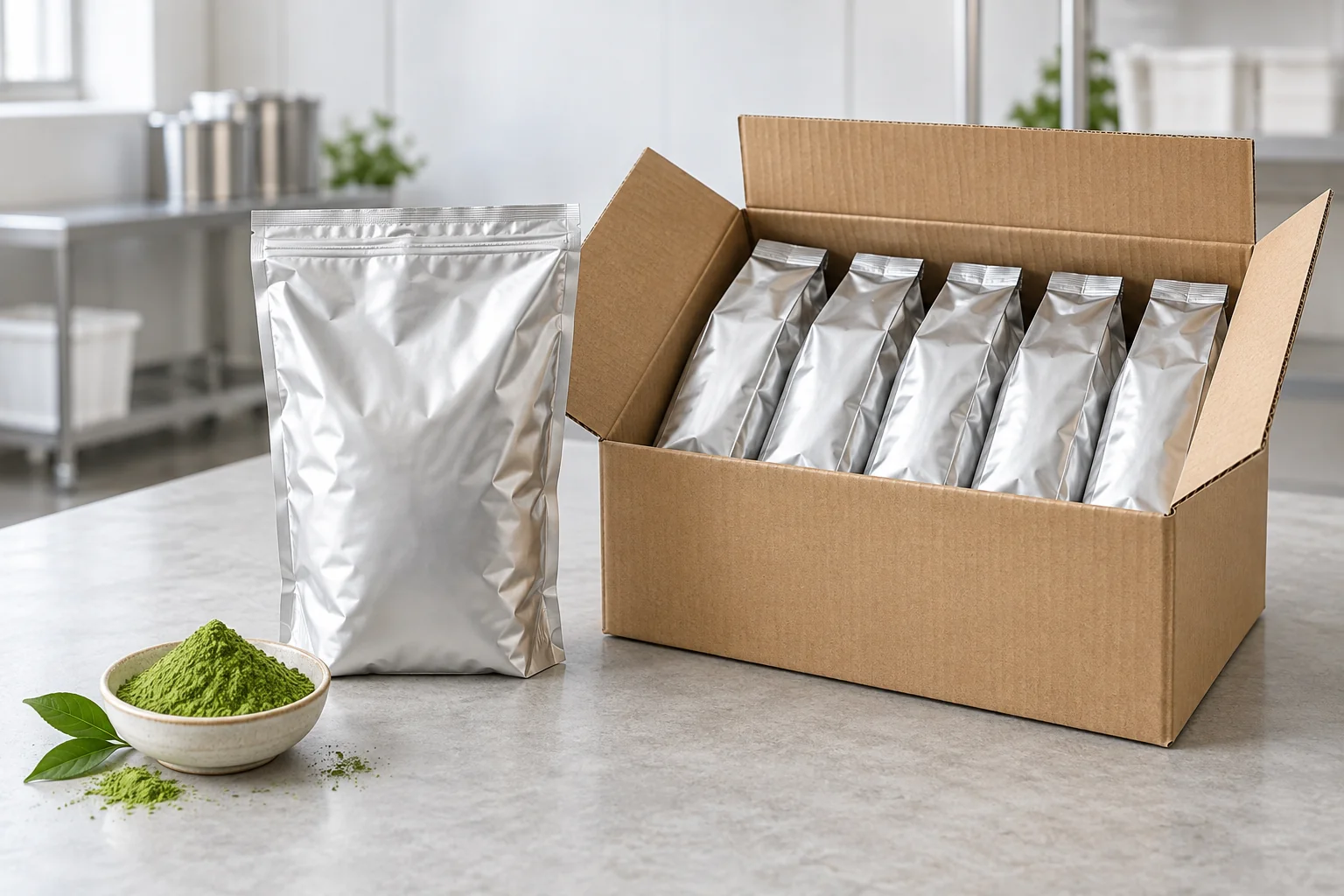
| Standard bulk packaging | 5 kg foil bag; 25 kg corrugated carton (5 × 5 kg bags) |
| Documents available on request | COA; TDS; SDS; Allergen; GMO; Origin; Pesticide Report |
Matcha Powder is a finely milled Camellia sinensis ingredient used in direct-drinking tea, matcha lattes, café beverages, bakery, confectionery, frozen desserts and nutrition products. Unlike a filtered tea infusion, matcha remains dispersed in the finished product, so powder colour, sensory profile, particle characteristics and formulation conditions all affect the consumer experience.
Ureda Naturals supplies multiple matcha grades rather than treating ceremonial, barista and culinary products as interchangeable. Grade selection is based on the finished application, required tea intensity, processing conditions, target colour and commercial positioning.
Commercial grade names are not uniform between suppliers. Buyers should therefore compare the exact grade code, prepared colour, aroma, flavour profile, particle-size method and intended application rather than purchasing by the words “ceremonial” or “culinary” alone.
| Grade | Reference | Best Application | Colour and Sensory Direction | Choose This Grade When |
|---|---|---|---|---|
| Imperial Ceremonial | S3 | Tea ceremony, koicha-style service and premium direct drinking | Vibrant jade green with refined umami, sweetness and a clean finish | Matcha is consumed mainly with water and its aroma, mouthfeel and finish determine the product position. |
| Premium Ceremonial | S2 | Daily pure drinking, premium teahouses and high-end beverage programs | Vibrant green with a smooth, fresh and mellow profile | Premium direct-drinking quality is required with a more commercially scalable positioning than S3. |
| Barista Reserve / Premium | S1 | Premium matcha lattes and blended tea beverages | Deep bright green with fuller tea body and a more pronounced flavour | The tea must remain recognisable after dairy, plant-based milk or sweetener is added. |
| Café Standard | Application-selected | Smoothies, frappés and mainstream café beverages | Fresh green with a balanced tea profile | The beverage contains ice, sweeteners or flavours and requires balanced colour, flavour and cost. |
| Classic Culinary | Application-selected | Bakery, cookies, cakes, fillings and confectionery | Standard green with a stronger tea character | Tea flavour must remain identifiable after contact with sugar, fat, flour or baking heat. |
| Industrial Grade | Application-selected | Ice cream, nutrition blends and cost-sensitive manufactured products | Yellowish green with a stronger, more astringent and drier profile | Recognisable tea character, manufacturing cost and large-volume use take priority over delicate drinking notes. |
S3 is the highest positioned direct-drinking grade in the current range. Its sensory profile and analytical specification are controlled separately so that buyers can evaluate both drinking quality and measurable product requirements.
| Item | S3 Requirement |
|---|---|
| Composition | 100% matcha powder |
| Appearance | Fresh bright green with fine and uniform particles |
| Prepared Colour | Deep green |
| Aroma | Distinctive and prominent |
| Taste | Fresh and full-flavoured |
| Condition | No mould, deterioration, contamination, off-odour, visible foreign matter or added materials |
| Grade | First grade |
| Test Item | Specification | Test Method or Control |
|---|---|---|
| Moisture | ≤6.0% | GB 5009.3 |
| Total Ash | ≤6.0% | GB 5009.4 |
| Particle Size | D60 ≤18 μm | Laser particle-size analysis |
| Total Tea Polyphenols | ≥1% | GB/T 21733 |
| Lead | ≤5.0 mg/kg | GB 5009.12 |
| Pesticide Residues | Complies with GB 2763 requirements for tea | Applicable pesticide-residue methods |
| Processing Hygiene | Complies with GB 14881 requirements | Production hygiene controls |
Matcha remains suspended plant material rather than becoming a completely dissolved tea extract. Its behaviour in production therefore depends on both the selected grade and the customer’s formulation and processing system.
| Manufacturing Stage | Typical Problem | What to Check | How the Result Changes the Decision |
|---|---|---|---|
| Powder Addition | Floating powder, agglomerates or powder adhering to the vessel wall | Addition rate, liquid-surface movement, pre-slurry method and viscosity at the point of addition | Determines whether to change the wetting procedure, order of addition or powder direction. |
| Mixing and Homogenization | Uneven dispersion, visible particles or gritty mouthfeel | Shear intensity, mixing time, homogenization conditions and particle-size distribution | Distinguishes a powder-selection problem from an equipment or process problem. |
| Heat Processing | Loss of green colour, weaker aroma or increased dullness | Temperature, holding time, formula pH and oxygen exposure | Shows whether a stronger colour or flavour grade is needed or whether the thermal process should be adjusted. |
| Filling and Storage | Sediment, surface rings, colour separation or aroma loss | Product viscosity, stabilizer system, particle distribution, packaging barrier and storage conditions | Determines whether the required correction belongs in the raw material, formulation, homogenization process or package. |
Finer matcha can improve mouthfeel and reduce visible grittiness, but particle size alone does not prevent sedimentation. In an RTD beverage, settling can also be influenced by particle-size distribution, viscosity, protein and mineral interactions, homogenization, stabilizer selection, heat treatment and storage conditions.
A candidate grade should therefore be tested in the complete formula. The trial should record bottom sediment, surface rings, colour separation, viscosity, flavour and redispersibility after the intended processing and storage sequence.
Dry-powder colour does not predict the final appearance of a matcha beverage or food. Dairy solids, plant proteins, fat, sugar, cocoa, flour and other ingredients can dilute or mask the visible green colour. Heat, acidic conditions, oxygen and light exposure can cause further deterioration.
Where colour is commercially important, compare samples after the complete manufacturing process and during the intended shelf-life study. Selection should be based on the packaged product rather than dry-powder photography alone.
Water tasting reveals the intrinsic aroma, umami, sweetness, bitterness and astringency of matcha. It does not show how the powder will perform in milk, sweetened premixes, bakery products or frozen desserts.
Dairy and plant-based bases can soften aroma and reduce apparent tea intensity. Sugar may rebalance astringency, while cocoa, vanilla, fruit flavours and bakery ingredients can mask delicate notes. For this reason, grade approval should combine a standardized water tasting with a finished-formula trial.
S3 and S2 are the principal directions for direct drinking. Compare them using the same powder dosage, water volume, water temperature and agitation method. Evaluate prepared colour, aroma, umami, sweetness, bitterness, astringency, foam, mouthfeel and finish.
S1 or S2 provides the most relevant starting direction when matcha must remain identifiable after milk or plant-based ingredients are added. Prepare a smooth concentrate or pre-slurry before adding the main liquid phase to improve powder wetting and reduce visible agglomerates.
Compare grades using the same matcha dosage, beverage base, sweetener level, mixing procedure, serving temperature and holding time. Judge the finished drink for colour, tea intensity, mouthfeel, foam and settling.
Add matcha before the formula becomes too viscous for effective powder wetting. Maintain a controlled order of addition, mixing energy and pre-slurry procedure before homogenization.
The pilot process should include the intended heat treatment and filling conditions. Record agglomeration during addition, appearance before and after heating, bottom sediment, surface rings, viscosity, flavour and redispersibility. If sediment remains unacceptable, evaluate the powder, homogenization and stabilizer system together rather than changing only the matcha grade.
Classic Culinary is the normal starting direction where matcha must remain identifiable after contact with flour, sugar, fat or baking heat. Evaluate the finished cake, cookie, filling, chocolate or confection rather than selecting from a water tasting.
Compare colour after processing and cooling, tea flavour against sugar and fat, bitterness, dryness and colour development during packaged storage.
Dairy solids, fat and air incorporation can make matcha appear lighter and less intense than it does in water. Select the grade according to finished-product colour and flavour, then examine changes through freezing, storage and the intended freeze–thaw conditions.
Differences in particle size and bulk density can lead to segregation during blending, transfer and filling. Evaluate blend uniformity, flow, dusting, fill-weight consistency and odour transfer. Quality review should also cover pesticide residues, heavy metals, microbiological requirements and destination-market documentation.
A reliable qualification program compares a small number of relevant grades under the same finished-product conditions. The following sequence helps prevent the approval of an attractive water sample that later performs poorly in commercial production:
Repeat-order consistency depends on maintaining the same commercial and technical identity after the development sample is approved. Ureda Naturals supports this through:
Matcha supply programs are supported by more than 2,300 acres of organic tea gardens and annual production capacity exceeding 1,000 tons. Grade selection, sampling, export documentation, repeat-order planning and OEM or private-label development are available for qualified projects.
| Supply Item | Details |
|---|---|
| Standard Inner Pack | 5 kg sealed foil bag |
| Standard Export Carton | 25 kg carton containing 5 × 5 kg bags |
| Additional Pack Directions | 1 kg, 5 kg, 10 kg and 20 kg formats according to grade and project requirements |
| MOQ | Determined by the selected grade, packaging format and project scope |
| Ambient Shelf Life | 12 months |
| Storage at 0–15°C | 18 months |
| Storage at −10–0°C | 24 months |
| Storage Conditions | Keep sealed in a cool, dry, clean and odour-free environment. Protect from light, moisture, contamination and strong-smelling materials. |
Compare the exact product code, prepared colour, aroma, taste, particle-size method, quality specification and intended application. Commercial terms such as ceremonial, barista and culinary are not uniform technical standards. For a valid comparison, prepare all samples at the same dosage, water temperature and agitation conditions, then test the shortlisted products in the intended commercial formula.
Homogenization reduces particle agglomeration and can improve distribution, but matcha remains suspended plant material. Sedimentation can still be affected by particle-size distribution, product viscosity, protein and mineral interactions, stabilizer choice, thermal processing and storage conditions. Review sediment depth, surface rings, redispersibility and viscosity under the complete production and storage sequence before changing the raw material.
Fine hydrophobic powder can trap air or form a wetted outer layer around a dry centre when it is added too quickly. Addition rate, liquid-surface movement, viscosity and the pre-slurry procedure can therefore matter as much as particle size. Compare powder addition under a fixed process before concluding that a different grade is required.
Test each candidate separately in the actual beverage base because milk fat, dairy proteins, plant proteins, minerals and stabilizers affect colour, flavour, foam and sediment differently. Keep the matcha dosage, sweetener level, mixing method and serving temperature constant, then compare finished colour, tea intensity, bitterness, astringency, mouthfeel and settling.
Start with a grade that provides sufficient colour in the finished formula, then control heat exposure, holding time, pH, oxygen, light and packaging barrier. Assess colour after the complete thermal process and during the intended shelf-life study. Dry-powder colour alone cannot demonstrate the colour stability of the finished beverage or food.
Record the exact grade code, approved specification, sensory reference, preparation method, application formula, packaging format and required quality documents. Incoming batches should be compared under the same preparation conditions for colour, aroma, taste, moisture, particle size and relevant safety parameters. This prevents a commercial grade name from being substituted with a technically different product.
INGREDIENT PARTNER
Tell us your intended application, approximate quantity and target market. Ureda Naturals will confirm the closest grade, packaging configuration and available documentation for your project.

Scan the QR code or
search WeChat ID: 18270717590
From Natural Origin to Formulation Intent
Tell us what you’re sourcing.
