


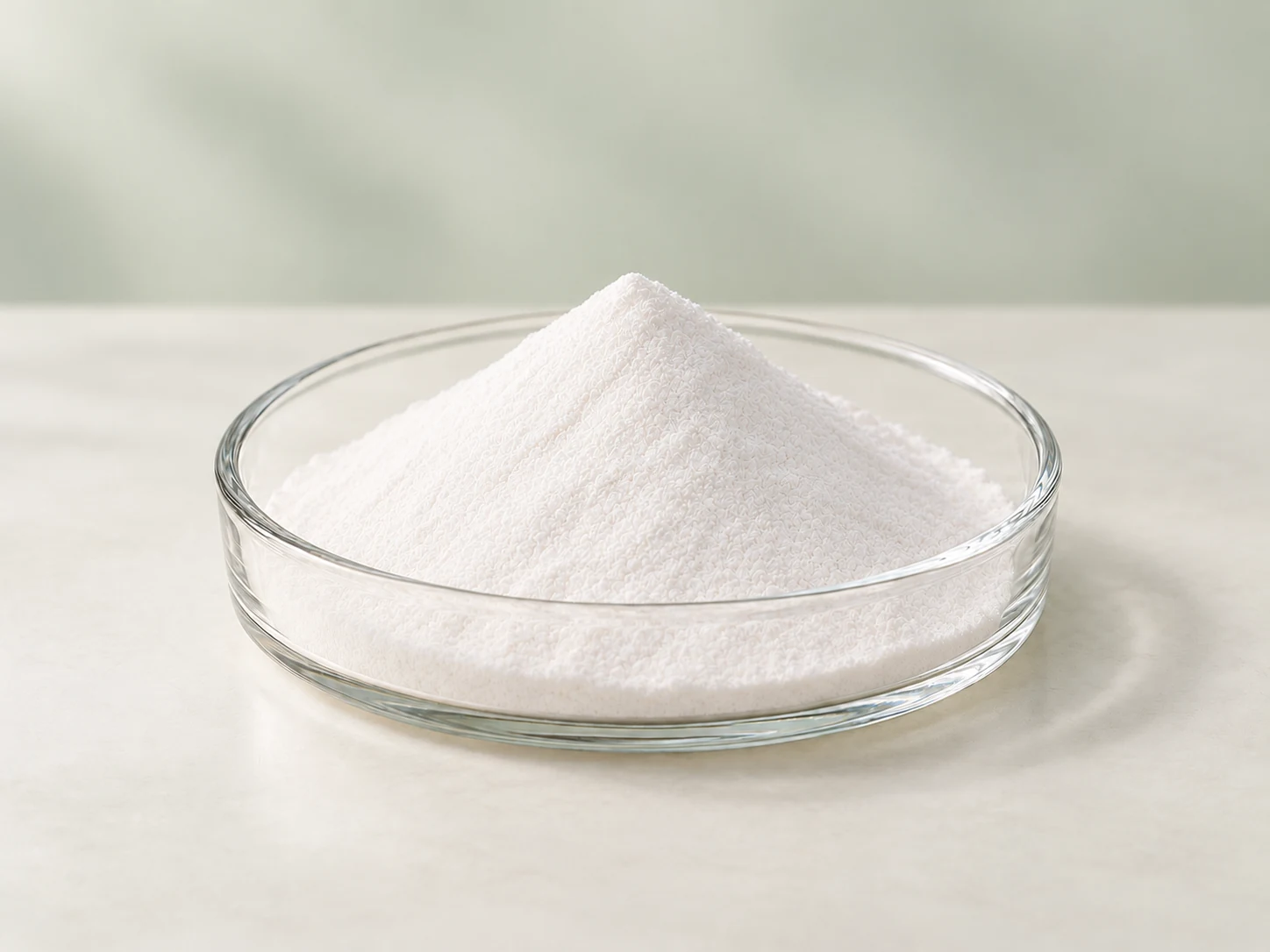
There is no single best sodium hyaluronate molecular weight for every product. Molecular weight affects hydration, solution viscosity, texture, dispersion and the process window, but the right range depends on the finished format, use level, pH, salts, shear and the sensory or application target. Grade selection should therefore start with the formula rather than a generic low- or high-molecular-weight claim.
What molecular weight changes in a formulation
Sodium hyaluronate is a high-molecular-weight polymeric material whose solution behavior depends on concentration and molecular-weight distribution. Higher-molecular-weight material may contribute more viscosity at a given concentration, while lower-molecular-weight material may be easier to process in some systems. The actual result still depends on hydration, shear, temperature and the rest of the matrix.
A supplier should state how molecular weight is measured and whether the reported value is a range, average or product-grade description. Without the method, values from different suppliers may not be comparable.
Food and beverage selection
In a beverage or oral liquid, the developer must balance hydration and viscosity against clarity, mouthfeel, filling, sediment and consumer use. Salts, proteins, sugars, acids and other hydrocolloids can change the final rheology. A material that performs well in purified water may thicken too strongly or disperse too slowly in the complete product.
Evaluate wetting, hydration time, lump formation, viscosity at the use level, pH response, visual appearance and stability. For a powder sachet, test reconstitution using the actual water volume and mixing instructions. For a ready-to-drink product, test the process and the final package.
Cosmetic grade and food grade are not interchangeable labels
Food and cosmetic projects may require different specifications, documentation and impurity controls. The grade should be matched to the intended market, route of use, formulation type and regulatory review. Do not choose a cosmetic grade for a food application or a food grade for a cosmetic application without confirming the relevant specification and documentation.
The current Ureda Sodium Hyaluronate product page lists food-grade and cosmetic-grade options with molecular-weight choices. The Resource article provides the decision framework; the product page remains the reference for current commercial grades.
Hydration is a process variable
Sodium hyaluronate can form hydrated layers that slow further wetting when added too quickly. Pre-dispersion, controlled addition, dry pre-blending, temperature and mixing sequence can affect the final result. The correct method depends on the grade and formula, so development trials should record the addition order and hydration time.
If the formula contains other polymers, test the complete system for synergistic thickening or loss of clarity. Measure viscosity using a defined temperature, spindle or geometry, shear rate and equilibration time. A value without those conditions has limited use for scale-up.
Supplier-qualification checklist
Request molecular-weight method, grade designation, assay or purity basis, viscosity method, moisture, microbial limits, appearance, particle-size information, source and production route, packaging, storage and target-market documentation. If the supplier offers custom molecular-weight options, request a sample and a method comparison before approving the grade.
Do not use molecular weight in the product title as a substitute for performance evidence. Finished-product behavior must be tested at the intended concentration and process.
Final decision rule
Choose sodium hyaluronate molecular weight by the required hydration and rheology profile, then verify it in the real formula. The correct grade is the one that disperses consistently, delivers the required texture or functionality and remains stable through processing and storage.
Technical references
- PubChem sodium hyaluronate identity information
- Food Chemicals Codex sodium hyaluronate monograph information
- Ureda Sodium Hyaluronate grades and specifications
Need help choosing a sodium hyaluronate grade for food, beverage or cosmetic development? Contact Ureda Naturals.
