
 Spanish
Spanish
Spanish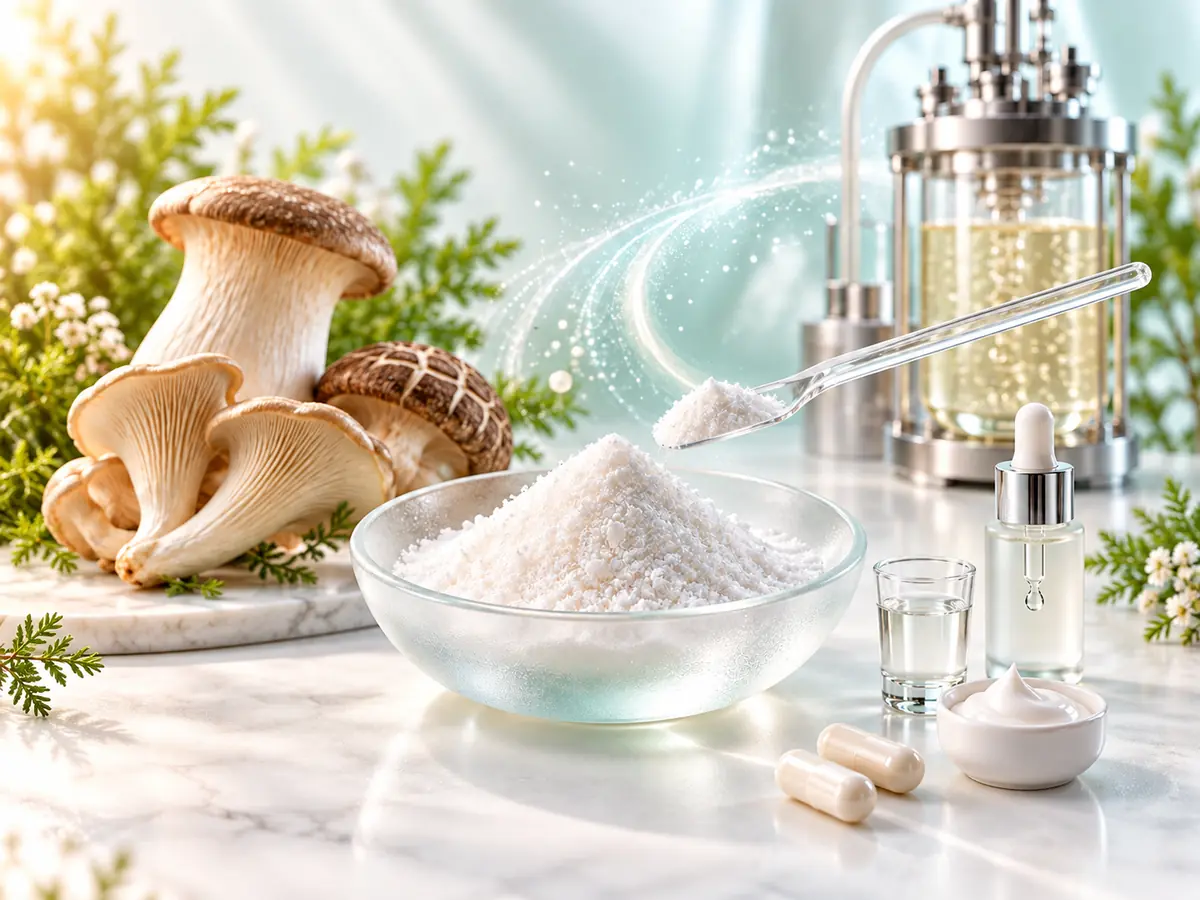
Ergothioneine Powder is not qualified by the assay number alone. A powder may meet a ≥98% assay requirement and still behave differently in a capsule blend, beverage, oral liquid or cosmetic base because moisture, particle distribution, matrix interaction and analytical recovery are controlled separately.
As an Ergothioneine manufacturer, Ureda Naturals supplies fermentation-derived pure Ergothioneine Powder for nutraceutical, food, beverage and cosmetic formulation. The material is developed around four connected requirements: consistent manufacturing, controlled powder properties, predictable process behaviour and complete batch documentation.
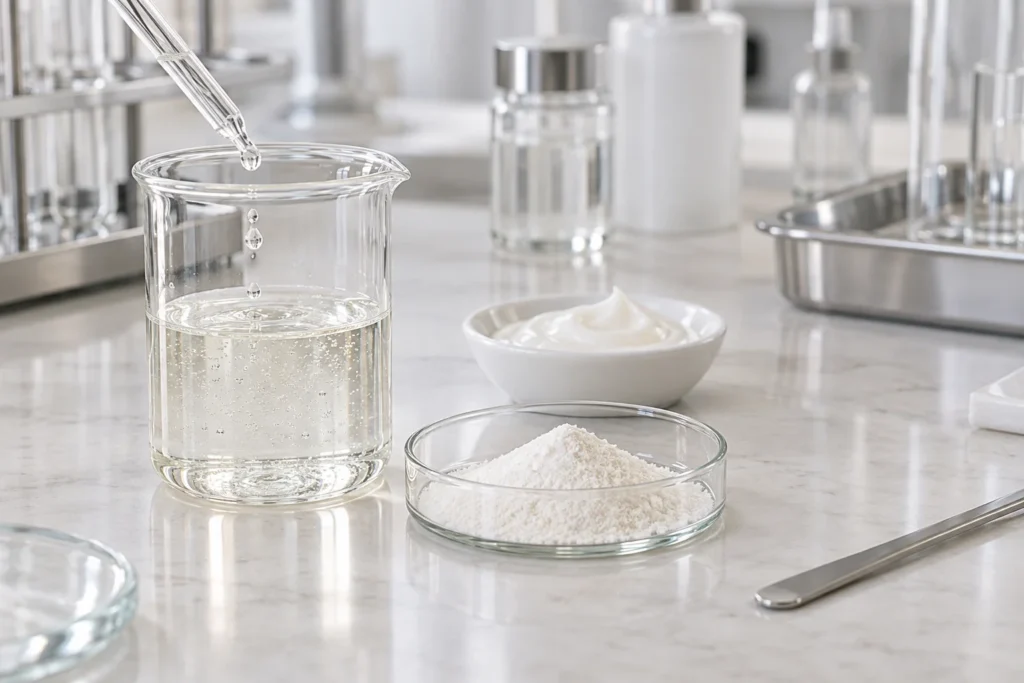
The manufacturing route determines more than the final assay. It also determines how the powder behaves when it is weighed, dispersed, blended, heated, stored or tested in a finished product.
| Manufacturing stage | What is controlled | Why it matters to the customer |
|---|---|---|
| Fermentation | Formation of the target compound and batch consistency | Establishes the starting point for identity and assay consistency |
| Clarification | Removal of cells and insoluble process material | Influences appearance, filtration and sediment risk |
| Aqueous purification | Concentration of Ergothioneine and reduction of related process components | Affects the impurity profile and application suitability |
| Drying | Moisture and powder structure | Influences caking, flow, storage and weighing |
| Milling and sieving | Particle-size distribution | Influences feeding, dispersion, dust and segregation |
| Packaging | Protection from moisture and light | Helps maintain comparability between development samples and bulk batches |
The important manufacturing question is not only “How much Ergothioneine is present?” It is also “What physical and chemical condition is the Ergothioneine in when it enters the customer’s process?”
Pure Ergothioneine Powder is most useful when the formulator wants to control the active loading and select the carrier system independently.
The main risk in a dry formulation is usually not whether the powder can be mixed. It is whether a relatively small quantity of active remains evenly distributed after preblending, transfer, feeding and filling.
Required Ergothioneine Powder = Target active amount ÷ assay fraction
For a target of 100 mg active:
For low-inclusion formulations, direct addition to the final batch may create local concentration differences. A geometric preblend with a compatible excipient gives the active a larger and more controllable distribution volume before it enters the main mixer.
The development check should include:
Passing 80 mesh does not guarantee uniformity. Density, particle shape, moisture, electrostatic behaviour and transfer distance can still produce segregation.
Ergothioneine Powder is suitable for water-phase development, but the complete beverage matrix determines the final result.
A useful starting point is to separate the process into four test systems:
This design distinguishes four different problems:
Mineral premixes deserve particular attention because copper, iron and other transition-metal sources may affect the measured recovery of oxidation-sensitive systems. Protein, peptide and hydrocolloid systems can also change viscosity, dispersion and sample extraction.
A controlled process sequence is:
The evaluation should compare:
A clear beverage with low assay recovery is not the same problem as a cloudy beverage with normal recovery. The first requires investigation of matrix interaction, metal-ion exposure or sample preparation. The second requires investigation of dispersion, order of addition and physical compatibility.
In cosmetic formulations, the important question is not only whether Ergothioneine Powder dissolves. It is whether the active enters the intended aqueous phase, remains evenly distributed through the base and can be recovered accurately from the finished formula.
A 0.5–2% range can be used as an initial cosmetic screening direction. The final selection should be based on active recovery, colour, viscosity, phase stability and the finished-product claims strategy.
Prepare a protected aqueous solution first and confirm complete dissolution before adding high levels of polymers, botanical solids, electrolytes or proteins.
Two process routes can be compared:
Allow the polymer system to hydrate before evaluating the active addition. If Ergothioneine Powder is added before the polymer network is established, it becomes difficult to distinguish incomplete dissolution from viscosity or ionic-strength effects.
Cosmetic evaluation should include:
A low analytical result does not automatically prove chemical degradation. In an emulsion or high-viscosity gel, incomplete extraction, adsorption to the matrix, non-representative sampling and interference from botanical or preservative components can all reduce measured recovery.
| Test item | Specification | Test method | What the result changes |
|---|---|---|---|
| Appearance | White to off-white crystalline powder | Visual | Confirms expected physical form and supports sample-to-bulk comparison |
| Identification | Conforms to Ergothioneine reference | HPLC and IR | Confirms the identity of the material entering production |
| Assay | ≥98.0% | HPLC, dry basis | Determines actual input quantity and active-dose calculation |
| Moisture | ≤1.0% | Loss on drying | Influences caking, flow, storage and weighing |
| Particle size | ≥95% through 80 mesh | Sieve analysis | Influences feeding, dust, dispersion and segregation |
| Residual ethanol | ≤1,000 ppm | GC | Links purification control with market documentation |
| Total heavy metals | ≤10 ppm | ICP-MS | Supports raw-material release and stability review |
| Lead | ≤1.0 ppm | ICP-MS | Controls a specific elemental impurity |
| Arsenic | ≤1.0 ppm | ICP-MS | Controls a specific elemental impurity |
| Cadmium | ≤0.5 ppm | ICP-MS | Controls a specific elemental impurity |
| Mercury | ≤0.1 ppm | ICP-MS | Controls a specific elemental impurity |
| Total plate count | ≤1,000 CFU/g | Microbiological testing | Supports raw-material release |
| Total yeast and mold | ≤100 CFU/g | Microbiological testing | Supports storage and finished-product quality |
| Escherichia coli | Not detected | Microbiological testing | Supports microbiological release |
| Salmonella | Not detected | Microbiological testing | Supports microbiological release |
Finished-product testing should use a matrix-specific recovery design rather than comparing the raw-material COA directly with a finished-product result.
A practical recovery study includes:
| Result pattern | More likely explanation |
|---|---|
| Active-only reference is low | Weighing, dissolution or analytical preparation problem |
| Active-only reference is normal, processed matrix is low | Process stress, metal-ion interaction or matrix interference |
| Pre-process and post-process spikes are normal, but the process sample is low | Loss during processing or incomplete recovery from the actual matrix |
| HPLC result is low but colour and appearance remain unchanged | Extraction or analytical interference should be checked before assuming degradation |
| Assay is normal but sediment or crystals appear | Physical compatibility problem rather than chemical loss |
This distinction prevents the customer from replacing a suitable raw material when the actual problem is sample preparation, matrix composition or process order.
A development sample should not be approved for bulk production only because its assay meets the target.
The sample and bulk batch should be matched by:
Scale-up changes residence time, shear, transfer distance, heat exposure and holding time. Dry products require repeat blend-uniformity checks. Beverages require repeat dissolution, heat-treatment and holding-time checks. Cosmetics require repeat pH, colour, viscosity and stability checks.
Ureda Naturals provides documentation for the selected Ergothioneine Powder grade, including product specification, batch COA, TDS, SDS, GMP, FSSC 22000, ISO 9001, HACCP, Halal, Kosher and FDA-related or GRAS support documentation.
MOQ is 1 kg.
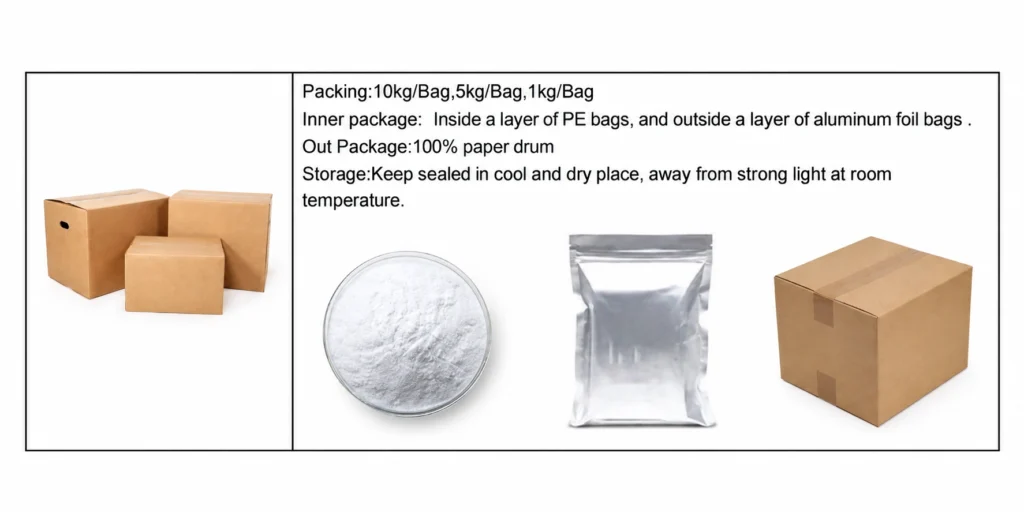
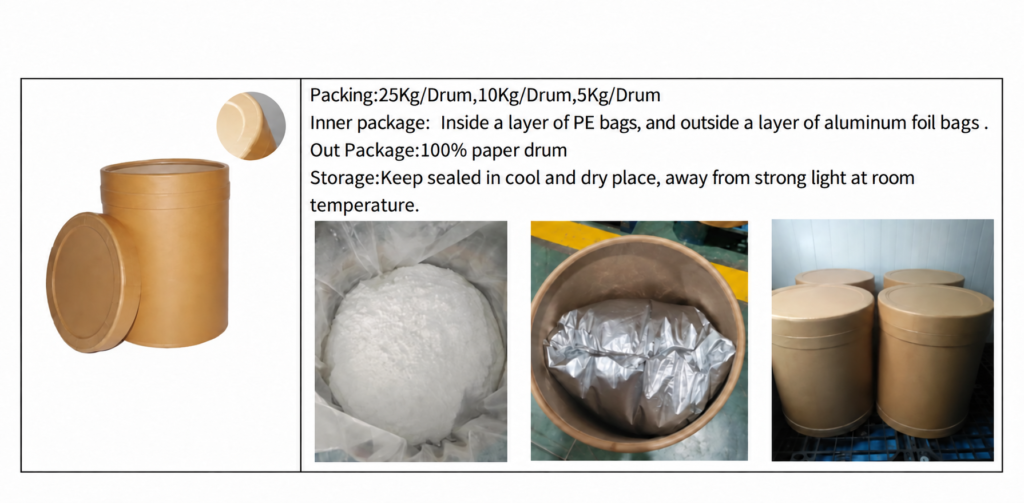
Keep Ergothioneine Powder sealed in a cool, dry place away from strong light at room temperature.
Assay does not describe moisture, density, particle distribution, flow, storage history or matrix recovery. These variables influence how the material moves through production and how much active can be measured in the finished product.
Mesh size does not control density, particle shape, electrostatic behaviour, moisture or transfer conditions. These variables can still cause segregation after blending.
Clear appearance only describes the physical state of the beverage. Metal-ion interaction, matrix interference, heat exposure or incomplete analytical extraction can lower measured recovery without producing visible sediment.
Compare an active-only solution, a mineral-spiked solution, a complete matrix and a processed sample. Measure recovery before and after mineral addition, heat treatment and holding time.
The main risk is content non-uniformity caused by low inclusion mass, density mismatch or segregation. Controlled preblending and beginning-, middle- and end-of-run sampling are essential.
Evaluate aqueous-phase addition before emulsification and protected-solution addition during cool-down. Compare active recovery, viscosity, colour, phase stability and preservative compatibility in the actual base.
Identity, moisture, particle size, residual ethanol, heavy metals and microbiological quality should be reviewed together because they affect different stages of production and release.
Match the specification version, assay basis, moisture, particle behaviour, packaging, storage history and batch COA, then repeat the critical process tests using the bulk batch.
INGREDIENT PARTNER
Tell us your intended application, approximate quantity and target market. Ureda Naturals will confirm the closest grade, packaging configuration and available documentation for your project.

